
Restorative Circles
Support For Communities
New Culture of Conflict Resolution.
Restorative Circles helps Communities, organisations, families and government develop their own processes for supporting those in conflict.

Conflict Resolution That Empowers All
When a group, family, organization or community forms, they adopt a way to respond to painful conflict, for when disagreements emerge. In other words, they design a justice system.
This is often done unconsciously, which means it most likely adopts society’s dominant model for justice, which is based on separation and punishment.
Many of us notice that this model tends to weaken community bonds and create even more pain.

Social Edges Emerge
At social margins, throughout history and today, systems are created that strengthen social cohesion when injustice and disagreement occur. These are based on radically different principles, those of dialogue and agreement.
Terms such as Restorative Justice, Transformative Justice or aspects of abolitionism are sometimes used to describe this area of research and practice. Meanwhile, those who develop and use these practices for themselves tend to use terms such as wheel, circle or council for the way they come together around their pain.

Empathetic Listening
an approach that guides the design of conflict resolution systems that strengthen community and that respond to painful conflict with transformative action. It supports communities in crafting practices of dialogue aligned with their shared values.

Hello! I’m Julie
Healing Harm
2025 I set 2 goals for myself. Somatic trauma healing this self. And learning Restorative Circle and other empathetic listening and conflict resolution systems. This page offers more resources and answers some questions. Contact me (page coming soon) to arrange a Empathetic Listening experience/presentation or introduction to Restorative Circle Facilitation
Restorative Circle Resources
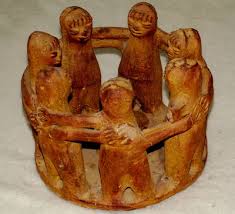
Building Community Belonging
No one ever need be alone in conflict. Take an introduction to RCF and reflective listening, and consider adopting this as your group policy for conflict resolution.
Sarah-Elizabeth Anderson, Restorative Circle Facilitation Trainer, has a few videos demonstrating Restorative Circles here on her media page. Her Vimeo videos are also below:

Dominic Barter, a co-creator of Restorative Circles, developed the practice from work with residents of gang-controlled shantytown favelas in Rio de Janeiro.
He describes empathy not just as understanding but as a “lending of my sense of them to them,” which helps people reconnect with themselves. He also discusses the need for “empathic support systems,” which are proactive, regular, and trustworthy networks designed to provide support even when someone is unable to ask for it. Find more information about his work on the Culture of Empathy website (good videos with Dominc).
Learn more about Dominic Barter’s work on Restorative Circles website.
Video of Dominic talking about Restorative Circles and how it is a way to have our conflict, so everyone if fully heard, (2009)
Watch on Vimeo: Listening Challenges
What makes it hard to fully listen to someone else. If you’re watching the video with a group, feel free to pause for partner breakout sessions. Take turns speaking and listening, then reflect together on what stood out for you in each role.
Watch on Vimeo – Reflective Listening
Watch on Vimeo: “Creating a Listening Community: A Restorative Circle Demonstration.” This video shows how reflective listening helps a community address conflict, understand one another’s needs, and begin building a way forward together.
Demonstrates the Restorative Circle process. See how members of this imagined community work through a conflict that has disrupted their leadership. By practicing reflective listening, the dialogue slows down, creating space for feelings and needs to be voiced and understood. From this shared understanding, they begin shaping a plan for how to move forward together.
Pre Circle Multi-Partiality Support
… more on the process
Links to resources
Watch the story of “Some one New” – how kindness is stonger then fear. Shared as part of the rich discussoin after my 2nd Restotative Circle Presentation (video here – slides here)

Getting Started is Easy
Free 20 Min Chat
coming soon …
Book Appointment
coming soon …
1st Session!
nComimg soon
My Approach
Empathetic Listening. Slow down to get the inside out. More coming soon…
Frequently Asked Questions
Does Restorative Circles support shared power and sovereignty?
When we say Restorative Circles we’re referring to an approach redesigned each time it is used, on the basis of local wisdom and meaning.
What will I learn in a Restorative Circle Facilitotor Training?
Dominic Barter and Restorative Circle Facilitator Trainers present an overview of the key elements of restorative systems and some of the practices they support.
To anchor our learning, Dominic shares examples from the evolution of restorative justice systems in Brazil and around the world, their origin and their application to various types of conflict, ranging from family disagreements to group conflict, school, workplace and social tensions, as well as conflict both with the law and with crimes as yet unrecognised by states. Such as rights of nature.
Who is Dominic Barter?
Dominic Barter is internationally recognised as a reference in the field of dialogical responses to conflict.
He has spent almost 30 years developing empathic social technologies, based on endogenous wisdom, that promote self-determination and partnership.
In the mid-1990s he co-developed Restorative Circles, a community based and owned approach to dynamic engagement with conflict, forged in the gang-controlled shantytown favelas of Rio de Janeiro.
Is there a connection to Non-Violent Communications?
Yes. For 18 years, Dominic was a student and colleague of Marshall Rosenberg and co-founded the CNVBrasil network in Brazil. He served as president of the Board of Directors for the international Center for Nonviolent Communication and as a member of the International Advisory Board of the journal ‘Restorative Justice’.
In 2022 Dominic was a keynote speaker at the 11th international conference of the European Forum for Restorative Justice, in Sassari, Italy. In 2024 his work with Italian inmates was nominated for the European Prison Achievement Award.
Can Restorative Circle Facilitation guarnetee I get my way?
No. The intention of such a system is to promote actions which repair harm, restore relationships and strengthen community safety, inclusion and well-being.
Embracing conflict in this way can be healing. It can strengthen social connectedness, help us navigate change and difference, and promote innovation and resilience.
Can I come as an individual or only with my group?
As such, while individuals are very welcome, you are encouraged to come with those you live, work, learn, pray, celebrate and eat with, where possible.This question is required.
What results has this system had and who is it for?
Adopted by the Brazilian Ministry of Justice and State Education Departments’ award-winning national projects in Restorative Justice, this work has inspired derivations throughout Brazil and over 50 countries. It has proved successful with communities, courts, civil and armed conflict, education, activists, families, police, hospitals, businesses and government.
The same principles led Dominic and colleagues to found Espaço Beta, a dialogical public high school based on relational intelligence, and to identify and develop innovative processes of economic solidarity they call Financial Coresponsibility.
Contact Me
Ask a question or request to book an appointment below.